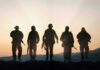

Three firefighters died in a wall of fire on the Utah‑Colorado border, and the hardest questions about why are still waiting in the smoke.
Story Snapshot
- Three wildland firefighters killed and two badly burned in a burnover on the Snyder fire.[7]
- A rapidly merging set of border fires grew to about 28,000 acres with zero containment.[1]
- Officials rushed in the Colorado National Guard and disaster orders while key facts remain unclear.[1]
- This tragedy fits a decades‑long pattern where “burnover” becomes the story before the full truth does.[18]
How a routine fire shift turned into a deadly burnover
Three firefighters were killed and two injured on Saturday while battling wildfires along the Utah‑Colorado border, according to the United States Wildland Fire Service.[5] The crew was working on the Knowles and Gore fires, which sit on the Colorado side of the line, across from the Snyder and Jones fires that started in Utah’s Grand County.[1]
Officials say the deaths happened in a “burnover” incident, when flames overrun firefighters and force them to deploy their emergency shelters in a last attempt to survive.[2]
The combined fires are now being described as the Snyder or Snyder Mesa fire and have burned about 28,000 acres with zero containment reported so far.[1] Evacuation warnings and pre‑evacuation orders went out for parts of Mesa County as winds pushed flames toward homes and ranches.[1]
Two injured firefighters were hospitalized with serious burn injuries, but officials have released few details about their condition, and the names of the dead have not yet been made public.[7]
Confusing fire names and a fast‑moving crisis zone
Early reports used several different names for what is now one massive blaze, adding confusion to an already tense situation.[5] Utah officials first called it the Snyder Mesa fire in Grand County before mapping showed the Snyder Mesa and Jones fires had merged and spread into Colorado.[1]
On the Colorado side, crews were assigned to the Knowles and Gore fires, which then expanded and merged with the Utah fires, creating one huge incident that governors’ offices and newsrooms struggled to describe clearly.[8]
A procession on Sunday honored the three firefighters who lost their lives while battling the Snyder Fire, a wildfire burning along the Utah-Colorado border. Officials said two other firefighters remained hospitalized with burn injuries. pic.twitter.com/Bc1sAbrUwE
— Breaking911 (@Breaking911) June 29, 2026
While residents simply saw one giant wall of flame, official language bounced between Snyder, Snyder Mesa, Knowles, Gore, and Jones.[1] That matters more than it seems.
Clear naming and timelines help investigators later understand who was assigned where, what weather data applied, and which tactics were used at which moment. When those labels get blurred in the rush, it becomes harder for the public to follow the story and ask focused questions about what exactly went wrong in the deadly burnover.
Rapid emergency declarations and the safety tradeoffs
Colorado Governor Jared Polis declared a disaster emergency for the Snyder fire region on Saturday and authorized the Colorado National Guard to help.[1] That move helps bring in more aircraft, manpower, and support to protect communities facing fast‑moving flames.
For families watching smoke roll over their town, a strong state response looks like common sense. People expect government to move quickly when homes, power lines, and highways are at risk.
The question often asked is how that speed balances with safety for the men and women on the line. When every political incentive points toward “do something fast,” leaders may lean hard on crews to attack large fires in extreme conditions before full risk checks are done.[18]
That does not mean anyone wanted this tragedy. It does mean citizens should pay attention to whether disaster declarations come with clear safety rules for ground crews, not just more resources and press releases.
What burnover really means and why it keeps happening
Researchers define a burnover as the moment firefighters are suddenly trapped by a rapid change in fire behavior, with escape routes or safety zones gone or compromised.[15] In those moments, crews may have only seconds to run, deploy shelters, or dive into whatever cover exists.
When it works, you hear a story about near misses. When it fails, you get a short line in a news story: “three firefighters killed in a burnover.” Behind that line are complex factors that go far beyond “bad luck.”[18]
🚨 BREAKING: Three firefighters are dead after battling a wildfire along the Utah-Colorado border.
Officials say three wildland firefighters were killed while fighting the rapidly growing #SnyderFire. Two other firefighters were seriously injured and transported to the hospital… pic.twitter.com/Sdz47r50Lg
— Chase Thomason (@ChaseThomason) June 28, 2026
Studies of past entrapments show repeated issues: wind shifts faster than forecast, steep terrain that hides flame movement, and plans that assumed escape paths would stay open when they did not.[18]
A landmark case was the 1994 South Canyon Fire in Colorado, where 14 firefighters died after getting trapped on a ridge with limited routes out.[6] That incident led to big changes in training and safety rules, yet entrapments and burnovers have continued in western fire zones over the decades.[18]
The gap between official honor and hard accountability
Right now, the United States Wildland Fire Service is focusing on honoring the “bravery, dedication, and sacrifice” of the fallen crew and supporting their families, which is the right first step after such a loss.[2]
However, official statements so far say little about the tactical decisions, equipment performance, or exact wind and terrain details at the moment the burnover occurred.[5] Media outlets have largely repeated the agency’s burnover narrative without independent forensic detail, because none has been released yet.[5]
Americans put both respect for service and demand for accountability on equal ground. People want heroes honored, but they also want to know whether leaders learned from the mistakes that killed them.
That means pressing for the incident action plan, weather logs, radio traffic, and crew testimony once firefighters and families are ready.[14] It means asking whether this burnover was truly unavoidable, or whether someone pushed a crew too deep into a dangerous, merging fire with escape routes that were already at risk.
What should come next if we mean “never again”
Federal wildland fire guides call for quick, careful entrapment investigations that document terrain, fuel, burn patterns, travel routes, and damaged equipment from all directions.[14] Those rules exist so that every fatal fire leaves honest lessons, not just memorials.
In this case, an independent safety report can show whether the Knowles, Gore, and Snyder fires were managed as one coordinated incident or as loosely linked blazes that left gaps in planning.[16]
Citizens do not need access to every raw document to care about the outcome. They can watch for clear public answers on simple points: where was the crew when the wind shifted, what had they been told about escape routes, and were they under pressure to hold a risky line to protect property rather than their own lives.
Respect for firefighters means more than saying “Valhalla” on social media. It means insisting that the people who send them into the flames prove they are learning from every name added to the roll of the fallen.
Sources:
[1] Web – 3 firefighters killed, 2 injured while tackling wildfires on the …
[2] Web – Three Firefighters Killed, 2 Injured in Snyder Wildfire on Utah …
[5] X – Three firefighters died and two were injured while tackling fires on …
[6] Web – Three firefighters killed, 2 injured in Snyder wildfire on Utah …
[7] Web – South Canyon Fire Entrapment Fatalities 1994
[8] Web – Three firefighters killed on Colorado-Utah border as wildfires …
[14] Web – Three firefighters killed while tackling major wildfires along …
[15] Web – [PDF] Investigating Wildland Fire Entrapments
[16] Web – [PDF] Wildland firefighter entrapment avoidance: modelling evacuation …
[18] Web – Predicting Firefighter Injury and Entrapment in Urban … – PMC – NIH