A United States Air Force colonel says he stayed alive for roughly 50 hours inside Iran with a broken back, arm, and shoulder—and the rescue that followed matched the scale of his ordeal.
Story Snapshot
- U.S. forces rescued the missing F-15E crew member from inside Iran after about 50 hours.
- President Trump announced the success, calling it one of the most daring rescue operations in U.S. history.
- The rescued officer, identified as a colonel and weapons system officer, was injured but expected to recover.
- The colonel later described his injuries and survival in a televised interview.
An F-15E Downed, A Crew Split, And A Clock That Would Not Stop
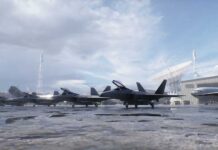
Iran shot down a U.S. F-15E Strike Eagle over remote terrain, leaving two airmen on the ground and enemy forces hunting for them. U.S. units quickly found and recovered the pilot.
The second aviator, a colonel and the weapons system officer, remained isolated in hostile territory as hours stretched into two days. Officials said the joint force pushed assets forward and built a rescue window inside Iran. President Trump monitored events and later announced success.
The colonel later recounted the fall, the hard landing, and the pain that followed. He said he believed he might die in that ravine but focused on staying hidden, staying warm, and staying alert. He signaled only when it was safe. He rationed movement to avoid detection.
He used training to fight shock and keep a clear mind. Survival, evasion, resistance, and escape skills exist for moments like this, and he leaned on that toolkit minute by minute.
Newly declassified footage shows the events leading up to the rescue of Bravo, the U.S. Air Force officer who was shot down and survived behind enemy lines in Iran for two days. https://t.co/YUIzeTBpKt pic.twitter.com/0x2zDndgmC
— 60 Minutes (@60Minutes) September 14, 2026
The Rescue Architecture: Report, Locate, Support, Recover
Personnel recovery doctrine is not glamour; it is a checklist that saves lives. U.S. forces followed the core sequence: report the downing, locate the survivor, support with overwatch and fires as needed, recover quickly, and exfiltrate to safety.
Commanders synchronized aircraft, surveillance, and special operators to pierce defended airspace, find the colonel, and get him out. Officials described the effort as bold but disciplined. Numbers and names will change over time; the central fact stands—he came home.
This mission fits a long record of combat search and rescue under pressure. From World War II to Korea to modern conflicts, allied forces have brought home downed aircrew by the thousands, often in days, sometimes in hours. The doctrine exists because it works.
The mission depends on rehearsals, radios, maps, and men and women who accept heavy risk to keep a promise: if you go down, we come get you. That is not drama. That is duty backed by logistics and steel.
Fifty Hours Of Choices: Pain, Patience, And A Quiet Radio
The colonel’s account adds the human layer. He described broken bones and the fear of capture, yet he stuck to training. He moved when he had to, stayed still when he should, and waited for the right sound in the sky.
He kept his signature low to avoid drawing a patrol. That patience likely saved his life. His injuries were serious, but officials said he was expected to recover after evacuation and treatment.
⌚🇺🇸 THE WATCH OF THE NAMELESS COLONEL
We know his callsign: “Dude 44 Bravo.”
We know he is a U.S. Air Force O-6 Colonel and F-15E Weapons Systems Officer who was shot down over Iran.But we still don’t publicly know his name—or his actual billet.
Now we know another detail:… pic.twitter.com/MhO5yEFpWn
— Jesus Romero (@CommanderRomero) September 14, 2026
The White House framed the rescue as a top-tier achievement, and that praise aligns with the scale of the risk and the result. Leaders have a duty to celebrate courage and success, not bury it in jargon.
At the same time, the operators who flew and fought that night would say the same thing they always say: they did their job so a fellow American could hug his family again. That is the American standard and the right one.
What This Means For Future Missions
Adversaries will study this event and harden their defenses. The United States will study it too and refine tactics, communications, and timing. That cycle is normal and healthy. Rescue missions in hostile countries demand precise planning and the will to act when the window opens.
Sources:
cbsnews.com, cnn.com, reuters.com, bbc.com, nbcnews.com, kurdistan24.net, nytimes.com, globalsecurity.org, bits.de, airandspaceforces.com, nationaldefensemagazine.org