As inflation anxieties linger and media critics circle, President Donald Trump is heading straight into politically competitive Pennsylvania to make the economic case the corporate press refuses to tell honestly.
Story Highlights
- Trump will visit northeast Pennsylvania on December 9, 2025, to promote his economic agenda amid voter concerns about prices and jobs.
- Polls show many Americans still doubt progress on affordability, even as the White House says Trump is undoing Biden-era economic damage.
- Republicans fear that unresolved inflation and a shaky job market could cost the GOP its narrow House majority in the next midterms.
- Trump is tying policies like fuel standard rollbacks and drug price efforts to everyday cost-of-living relief for working families.
Trump takes the economic case to Pennsylvania
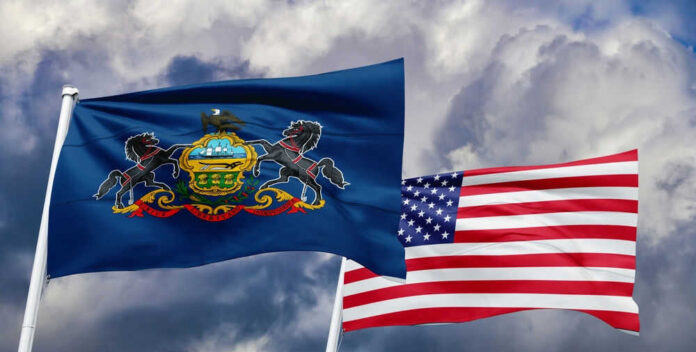
President Donald Trump will travel to northeast Pennsylvania on Tuesday, December 9, 2025, to spotlight his economic agenda at a time when many Americans remain anxious about their financial futures and daily costs.
The visit targets a politically competitive region where voters have swung between parties and where inflation, interest rates, and job security speak louder than any partisan talking point. For conservatives, the trip underscores Trump’s willingness to face skeptical audiences rather than hide behind friendly media or controlled environments.
A recent October 2025 NBC News survey found that nearly two-thirds of respondents believe Trump has not yet fulfilled his pledge to bring down costs and supercharge the economy, a perception Democrats and legacy outlets eagerly amplify.
Those numbers highlight a stubborn gap between policy actions in Washington and how families feel when they buy groceries, fill up their tanks, or pay their mortgages. The Pennsylvania trip functions as a direct attempt to narrow that perception gap by making the argument personally, rather than relying on filtered coverage.
President Donald Trump will visit an undisclosed location in Northeast Pennsylvania on Tuesday to talk about his administration's progress in boosting the economy. https://t.co/ZI9aT3d9fi
— WVIA (@WVIATVFM) December 4, 2025
White House message: undoing Biden-era damage
White House officials insist that Trump’s economic program has strengthened the economy and that he is working to reverse damage caused by former president Joe Biden’s spending, regulatory expansion, and energy restrictions.
From the administration’s vantage point, the affordability strain facing many households did not begin in January 2025 but is the cumulative result of years of inflationary policies, green mandates, and health-care distortions.
The Pennsylvania trip is described internally as an effort to reframe that story around long-term repair instead of short-term political blame.
One White House official, speaking anonymously, framed the visit as more about narrative than new policy, emphasizing that the team has been focused on affordability “since Day 1” and has no intention of changing course.
That candid assessment reflects a belief that conservative reforms are already in motion but have not been communicated in a way that cuts through partisan attacks and media spin.
For many right-leaning voters, this raises a familiar frustration: real progress often goes unreported, while every lingering problem is pinned solely on Republican leadership.
Republican concerns about inflation and the House majority
Inside Congress, Republicans are increasingly nervous that persistent inflation, elevated interest rates, and an uncertain job market could put their fragile House majority at risk in the upcoming midterm elections.
Members hear regularly from constituents squeezed by higher monthly payments, shrinking savings, and worries about layoffs or reduced hours. Strategists warn that if voters do not feel a clear improvement soon, swing-district Republicans could pay the price, even if many of the underlying problems originated under Democrat control.
GOP campaign operatives say dozens of lawmakers have been sounding alarms for months, urging the administration and party leadership to sharpen their economic message and stay relentlessly focused on cost-of-living relief.
That pressure helps explain why Trump is choosing a battleground region like northeast Pennsylvania for an economic speech rather than a reliably red stronghold.
The aim is to reassure anxious voters that Republicans grasp the seriousness of their situation and are not retreating into culture-war rhetoric alone, even as they continue battling woke policies and government overreach.
Clarifying the affordability “crisis” and assigning blame
The administration’s communication on affordability has sometimes appeared inconsistent, with aides promoting concrete steps to lower costs while Trump himself has occasionally called the affordability crisis a “con job” or a “hoax.”
According to one White House official, those comments are meant to argue that Democrats and their allies are misrepresenting the origins of today’s economic pain by pinning it on current conservative policies rather than their own past decisions.
For constitutional conservatives, that distinction matters because accountability must follow the facts, not partisan narratives.
Trump’s team contends that the true “con” lies in pretending that years of deficit spending, aggressive regulation, and ideological energy experiments under Democrats had no role in driving prices higher.
From their perspective, demanding instant relief while obstructing reforms to health care, energy, and regulation amounts to political theater rather than serious governance.
Voters in Pennsylvania will hear Trump argue that restoring stable, affordable living requires sticking with a pro-growth, pro-energy, limited-government path instead of returning to the big-government approach that triggered this squeeze.
Policy actions: fuel standards, health care, and everyday costs
On the policy front, Trump recently announced plans to roll back stringent fuel efficiency standards, arguing that loosening those mandates will reduce the production costs of new vehicles and make cars more affordable for middle-class buyers.
Supporters say heavy-handed rules effectively tax consumers by forcing automakers to build more expensive vehicles that families neither want nor can easily afford.
Critics on the left view these rollbacks as environmental backsliding, but many conservatives see them as common-sense relief from regulatory excess that punishes working drivers.
White House aides also highlight initiatives such as “baby bonds” and efforts to cut prescription drug prices as evidence that Trump is serious about helping families make ends meet, even while resisting expansive federal takeovers of health care.
At the same time, Democrats are attacking Republicans over the impending expiration of Affordable Care Act subsidies, warning that millions could face higher premiums if Congress does not act.
The Democrat Congressional Campaign Committee has branded moderate Republicans as callous, signaling that health-care affordability will be a central line of attack in the midterms.