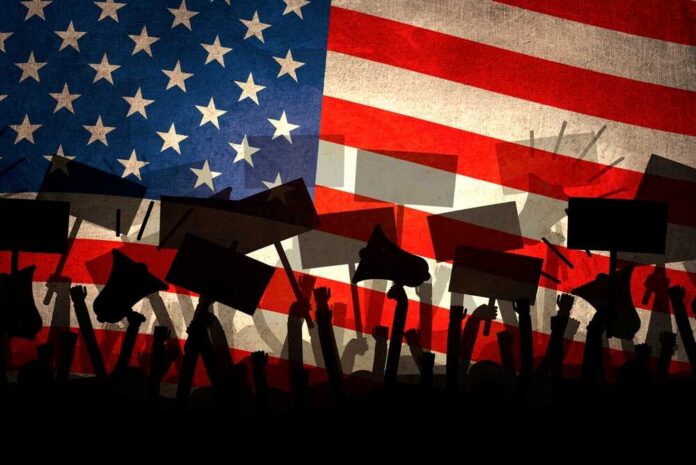
Massive anti-Trump protests swept across America as frustrated citizens—including disillusioned MAGA supporters—turned out in record numbers to oppose the Iran War and broken promises that dragged us into yet another endless conflict.
Story Snapshot
- Over 3,000 “No Kings” protests erupted nationwide on March 28, 2026, marking the largest domestic political demonstration in U.S. history amid growing fury over the Iran War and Trump’s unfulfilled pledge to avoid foreign entanglements.
- Two-thirds of protesters came from outside major cities, with red states like Idaho and Wyoming seeing 40% growth in participation as conservative Americans voice opposition to regime change wars and skyrocketing energy costs.
- The protests follow deadly ICE shootings of American citizens and nationwide strikes, occurring as Trump’s approval rating sinks below 40% ahead of crucial November 2026 midterm elections.
- Events spanned all 50 states and international locations, drawing support from labor unions and grassroots organizations frustrated with immigration crackdowns, economic strain, and what many view as authoritarian overreach.
Broken Promises Fuel Historic Turnout
The third “No Kings” protest on March 28, 2026, mobilized Americans across all 50 states and multiple international cities in what organizers called the “single largest non-violent day of action in history.” Over 3,000 separate events drew participants from rural communities, suburban neighborhoods, and urban centers—a dramatic expansion from previous protests in June and October 2025.
The timing coincided with mounting frustration over Trump’s second-term policies, particularly the Iran War that directly contradicted his 2024 campaign promises to keep America out of new conflicts. For many supporters who believed they were voting for an America First agenda, this foreign entanglement represents a fundamental betrayal.
Red State America Joins the Resistance
The geographic diversity of these protests reveals a striking reality: 66% of participants came from outside major metropolitan areas, with significant rallies in traditionally conservative strongholds.
Alaska’s Kotzebue, Wyoming communities, and Idaho towns hosted events alongside major cities like Chicago, San Francisco, and Washington, D.C. Leah Greenberg of the Indivisible Project noted this represented a 40% increase in red-state participation compared to the first protest.
This surge reflects genuine conservative frustration with policies that seem to abandon constitutional principles and fiscal responsibility. When rural Americans in Republican backyards turn out en masse, it signals that opposition transcends typical partisan divides—particularly regarding foreign wars that drain resources while gas prices soar.
Protesters gathered in cities across the US on Saturday to join a massive “No Kings” demonstration against Donald Trump, which organisers promoted as “the largest day of protest in US history”. https://t.co/CvGl7rQOLU pic.twitter.com/SGedxZ5thu
— Financial Times (@FT) March 29, 2026
ICE Violence and Immigration Crackdowns Spark Outrage
Recent ICE shootings of American citizens Renée Good, Keith Porter, and Alex Pretti in Minnesota catalyzed widespread anger, contributing to the protest’s massive scale. These incidents followed Operation Metro Surge immigration crackdowns and multiple strikes in January 2026, including a Minnesota general strike on January 23 and a nationwide strike on January 30.
While border security remains a legitimate concern for constitutional conservatives, the deadly use of force against American citizens raises serious questions about government overreach and due process violations.
Bruce Springsteen performed in Saint Paul, debuting “Streets of Minneapolis” commemorating the victims, while rallies in Chicago emphasized the slogan “no thrones, no crowns, no kings—Hands off Chicago and hands off our democracy.”
Economic Pain Amplifies Political Frustration
The protests occurred against a backdrop of rising gas prices, airport delays, and economic strain tied directly to the Iran War—precisely the kinds of consequences Trump supporters expected to avoid by electing an administration that promised peace through strength rather than regime change adventures.
AFL-CIO participation signals labor’s growing discontent with policies that prioritize foreign intervention over domestic prosperity. With Trump’s approval rating below 40% heading into November 2026 midterms, the political calculus has shifted dramatically.
San Diego County alone saw over 40,000 marchers downtown, part of more than 20 events countywide, while Los Angeles County hosted 41 separate rallies. These numbers reflect authentic frustration from Americans who feel deceived about the direction of governance and economic policy.
Anti-Trump rallies pop up in thousands of U.S. cities for 'No Kings' protest https://t.co/JxOVdSNigk
— Doug Kellett (@iDougradio) March 29, 2026
The movement’s expansion to international locations, including Australia, Costa Rica, Western Europe, Japan, and France, demonstrates global concern about American military adventurism.
For conservative Americans who prioritize national sovereignty and constitutional limits on executive power, the “No Kings” message resonates: no president should wield unchecked authority to drag the nation into wars without genuine threats to homeland security.
As midterm elections approach, Republicans face a reckoning with base voters who expected America First policies, not neoconservative-style interventions that inflate budgets, raise energy costs, and sacrifice American lives for questionable strategic gains abroad.
Sources:
‘No Kings’ Protests May Draw Biggest—and Most Diverse—Anti-Trump Crowds Ever
Where the ‘No Kings’ Protests Are Taking Place
Anti-Trump Protests Kick Off on ‘No Kings’ Day in US