Two teenagers dead in a BMW, three worshippers slain outside a San Diego mosque, and a motive sketched mostly by anonymous leaks have reignited fears that the system cannot stop — or honestly explain — the country’s growing flashes of hate-fueled violence.
Story Snapshot
- Law enforcement sources identified the alleged mosque shooters as teenagers Cain Clark, 17, and Caleb Velasquez, 18, who reportedly died by suicide after the attack.
- Officials say early evidence points to anti‑Islamic, racist motives, including hate messages on weapons and a suicide note about “racial pride.”
- The sequence of the attack and police response is fairly clear, but key details still rely on unnamed sources and unreleased documents.
- The case highlights how broken families, online extremism, and opaque institutions leave many Americans convinced the system is failing them.
What Authorities Say Happened Outside San Diego’s Largest Mosque
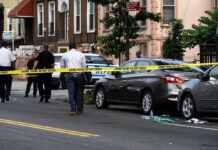
On May 18, 2026, police in San Diego responded to reports of an active shooter at the Islamic Center of San Diego, the city’s largest mosque, after calls came in around late morning about gunfire and victims outside the building.[3] Officers arriving within minutes found three adults dead near the entrance, while students and staff in an adjacent Islamic school were locked down until police cleared classrooms and prayer halls.[2][3] Authorities later located a nearby vehicle containing two deceased teenage males.
Multiple news outlets, citing senior law enforcement officials, report that investigators have identified the dead suspects as 17‑year‑old Cain Clark and 18‑year‑old Caleb Velasquez, both from the San Diego area.[3][5] Police and federal agents say they believe the pair opened fire outside the mosque, then fled only a few blocks before dying from apparent self‑inflicted gunshot wounds inside a white BMW.[2][3][5] Officials are treating the case as an active shooter incident rather than a gang dispute or targeted family conflict.
Emerging Evidence of Hate and the Gaps in What We Know
Investigators have publicly framed the shooting as a possible hate crime, pointing to anti‑Islamic writings and hate‑filled messages reportedly found on the suspects’ weapons and inside their vehicle.[2][3][4] One report says a shotgun and gas can at the scene carried “SS” stickers referencing the Nazi Schutzstaffel, reinforcing the impression of extremist, racially charged symbolism.[4] A law enforcement source also told reporters that at least one suspect left a suicide note talking about “racial pride,” though the note itself has not been released.[1][5]
Clark’s mother reportedly called police hours before the attack, warning that her son was missing, suicidal, and that several firearms and her vehicle were gone, possibly with another young man traveling alongside him.[2][4] That early call reportedly led officers to raise their threat level, but it was not enough to prevent the later attack outside the mosque.[2]
Neighbors described Clark as a quiet teenager and a former high school wrestler, adding to the community’s shock at the alleged transformation from helpful local kid to accused hate‑crime shooter.[1][2]
Early Narratives, Deep Distrust, and a System Under Strain
Most public details about motive and planning currently come from unnamed law enforcement sources filtered through television segments and online articles, not from sworn affidavits, crime lab reports, or released body‑camera footage.[1][3][5]
This pattern fits a broader trend in high‑profile shootings: initial narratives are shaped by police leaks and fast‑moving media, while the harder evidence — ballistics, digital forensics, autopsy reports — emerges slowly, if at all, into public view.[3][4] For citizens already skeptical of “the system,” that gap fuels suspicion of both cover‑ups and politicization.
🚨2 TEENS DEAD AFTER KILLING 3 IN SAN DIEGO MOSQUE SHOOTING
The 2 gunmen who killed 3 men at the Islamic Center of San Diego have been named as 17-year-old Cain Clark, a former high school wrestler who attended school virtually, and 18-year-old Caleb Velasquez.
Both suspects… https://t.co/6rxBsX3vMn pic.twitter.com/rjbz39HFab
— NewsForce (@Newsforce) May 19, 2026
How This Case Fits a Larger American Breakdown
The San Diego mosque shooting touches several fault lines running through American life in 2026: fraying families, untreated youth mental health problems, easy access to firearms, and online ecosystems where rage and racial obsession can flourish without challenge.[2][3][4]
One teenager’s mother reportedly did the hardest thing a parent can do — call police on her own child — and still three men died outside a place of worship.[2][4] For many Americans, that is proof not of her failure, but of a broader system that waits for violence instead of intervening meaningfully upstream.
Authorities say they are now digging into the suspects’ digital histories, social media activity, and any potential network of influences that may have encouraged anti‑Muslim or white supremacist ideology.[2][3][4] Yet those investigations will largely happen behind closed doors, with carefully selected pieces of information eventually shared at press conferences or in short releases.
Until more primary records are made public — police reports, 911 audio, body‑camera footage, and forensic findings — citizens are left weighing partial facts against a backdrop of longstanding mistrust in government competence and honesty. In that sense, the San Diego tragedy is both a specific horror and another data point in a wider story of institutions struggling, and often failing, to keep faith with the people they are supposed to protect.
Sources:
[1] YouTube – Green-Haired Mosque Shooting Suspect Would Help …
[2] YouTube – Who Is Cain Clark? Star Wrestler Linked To DEADLY San Diego …
[3] Web – 2026 Islamic Center of San Diego shooting – Wikipedia
[4] Web – Who were Cain Clark and Caleb Vazquez? San Diego mosque …
[5] Web – Cain Clark and Caleb Velasquez: mosque shooting suspects had …