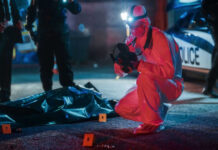
Police say a hunter fired at what he thought was a deer and killed a mother walking with two children in a Delaware field.
Story Snapshot
- Delaware State Police charged Walter Moorhead, 74, with manslaughter after a fatal shot in Ellendale.
- Investigators say the victim walked through an open field with a man and two children when the shot was fired.
- Police report Moorhead was deer hunting from a ground blind and mistook the woman for game.
- The charge matches a pattern where misidentification while hunting is treated as criminal negligence.
What Police Say Happened In The Field
Delaware State Police say the shooting happened Friday evening near South Old State Road, north of East Robbins Road, in Ellendale.
Investigators say Walter Moorhead, a 74-year-old from Salisbury, Maryland, hunted deer from a ground blind. They say a 39-year-old woman walked through the field with a man and two children.
Police say Moorhead believed he saw a deer and fired his rifle, striking the woman. She died from her wound. Troopers arrested Moorhead on manslaughter and related charges.
News outlets reported the same core account from the police statement. Reports identified the victim as a 39-year-old from Georgetown and noted the time as about 7:40 p.m. in an open field.
Coverage described charges that include manslaughter, possession of a firearm during a felony, and counts of reckless endangering tied to the nearby family members. A court will decide facts and law, but the public record at this stage comes from the state police statement.
Why Prosecutors Often Call This Manslaughter
Courts and wildlife safety rules stress one basic command: confirm your target before you fire. Case law and training materials describe this as a universal standard, not a suggestion.
When a shot kills a person after the shooter failed to confirm the target, prosecutors often argue criminal negligence. Courts have upheld that theory.
A Virginia case summarized the rule plainly: do not shoot at sound, color, or movement; be absolutely sure of your target before you fire. That is the frame Delaware authorities appear to use here.
Other states have reached similar results. Older Minnesota and North Carolina cases show juries and judges treating a mistaken-target shooting as manslaughter when the facts show carelessness beyond a simple accident.
The thread across these rulings is common sense: a firearm carries lethal force, so the duty of care is high. If you squeeze the trigger without positive identification, the law can treat that as criminal, even if you never meant to kill.
Hunting Safety, Real Risks, And A Hard Lesson
Hunting safety instructors repeat the same checklist. Know your target. Know what lies beyond it. Control your muzzle. Keep your finger off the trigger until ready to shoot. These rules exist because dusk light, brush, and motion can trick the eye.
That is why safety courses insist on target confirmation, not a guess. Federal Bureau of Investigation (FBI) messaging on negligent manslaughter also places hunting mishaps in the same bucket as other preventable harms that kill thousands over a decade.
A hunter allegedly mistook a 39-year-old woman for a deer before shooting her dead in a horrific incident in Delaware. Walter Moorhead, 74, has been charged with manslaughter after investigators said he fired his rifle at what he believed was a deer, striking Maria Chilel Soto.… pic.twitter.com/WFEcTmiaz1
— Frank News (@FrankNews1234) September 21, 2026
The Delaware case lands on two hot buttons at once: firearm responsibility and family safety in shared spaces like fields and trails. Most hunters follow the rules and never have a problem. But one bad shot can break a family in a second.
Rights come with duties. If you carry the power to kill, you carry the duty to slow down, verify, and refuse a risky shot. That is not politics; it is accountability.
What Comes Next In The Legal Process
Police filed charges, and prosecutors will present evidence. A defense attorney may contest the timeline, visibility, and whether the setting met legal hunting guidelines.
The state will likely focus on target identification and the presence of a man and two children in the line of fire, which supports the reckless endangering counts.
The path from now to verdict can take months. The early narrative, however, is clear and consistent with how similar cases move forward in American courts.
Sources:
rmb.reuters.com, people.com, dsp.delaware.gov, msn.com