
The Justice Department just walked away from a fight over 20,000 California ballots, three weeks after the votes it wanted thrown out had already decided the election.
Story Snapshot
- The Justice Department sued California in October, claiming more than 20,000 likely noncitizens were registered and sent mail ballots.
- A federal judge, an appeals court, and the Supreme Court all declined to block California from counting those ballots.
- With the midterm election over, the Justice Department voluntarily dropped the lawsuit on November 6.
- Los Angeles County’s own review of a sample from the list found most names had never voted and many appeared to be U.S.-born citizens.
What The Justice Department Originally Alleged
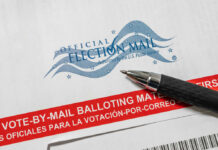
In mid-October, the Justice Department announced it had worked with the Department of Homeland Security to flag more than 20,000 California voter registrations as likely belonging to noncitizens. Officials said some of those people had already received vote-by-mail ballots. The Department sued the state, demanding those ballots be set aside until citizenship could be confirmed before the election.
California Secretary of State Shirley Weber pushed back hard. She said the federal government never handed over proof backing up the 20,000 figure. She called the demand to segregate ballots an “unprecedented” move built on methodology officials “still fail to explain or provide”.
Courts Refused To Intervene Before The Election
A federal judge in California rejected the Justice Department’s request to pull the ballots from the count. An appeals court later declined to overturn that ruling. The Supreme Court then denied the Department’s emergency appeal on the eve of the election, letting California keep counting the disputed ballots without interruption.
That string of losses mattered. Every court that looked at the request chose to let voters’ ballots stand rather than freeze them based on an unverified list. For an administration that has pushed hard on election integrity claims, three straight defeats in the same case is a notable pattern, not a coincidence.
Why The Lawsuit Was Finally Dropped
Once Tuesday’s midterm election wrapped up, the legal fight lost its purpose. The Justice Department filed a notice of voluntary dismissal on Friday, acknowledging the relief it originally sought was now impossible since ballots had already been counted. The case ended not with a ruling on the merits, but with the clock simply running out on what the lawsuit could still accomplish.
What Los Angeles County Found When It Checked The List
Los Angeles County did not just take the federal list at face value. Officials there pulled a sample of 200 names and checked them. More than 71% of those people had never voted at all. Nearly 43% had canceled voter registrations, and another 4.6% were inactive, meaning no ballot was even mailed to them this year.
Even more striking, among the sampled records where birthplace was clearly listed, 38.9% showed the person was born in the United States. Los Angeles County’s assistant registrar-recorder said the preliminary findings pointed to one conclusion: the federal list itself looked unreliable, not the voter rolls it was built to challenge.
The Bigger Picture On Noncitizen Voting Claims
This case fits a familiar pattern. Database matching across state and federal systems is messy work, and names, addresses, or partial records can easily misfire. Research has repeatedly found that confirmed noncitizen voting is exceedingly rare, with one review estimating it at a few thousandths of one percent of ballots cast in examined jurisdictions. That gap between alarming headline numbers and what careful verification actually turns up is the real lesson here.
The Justice Department on Friday voluntarily dismissed its California ballot lawsuit, ending its bid to set aside mail ballots from roughly 20,000 voters on its likely noncitizen list.
DOJ told the court the ballots can no longer be segregated before the Nov. 13 hearing. Judge…
— Frontier Signal (@FrontierSigHQ) November 7, 2026
None of this means election security concerns are fake or unimportant. The Justice Department did bring separate criminal charges against 11 foreign nationals accused of illegally registering and voting, a track that continues independent of the dismissed lawsuit. But a 20,000-name list that shrank from an earlier claim of 190,000, and that California’s own spot-check found riddled with inactive accounts and U.S.-born residents, deserved the skepticism it got from the courts. Accuracy, not just urgency, has to come first when the right to vote is on the line.
Sources:
cbsnews.com, nbcnews.com, bostonglobe.com, ajc.com, us.cnn.com, supremecourt.gov