Two Navy aviators punched out over the Atlantic at dusk—and four shipmates on deck were hurt as the carrier caught the blast.
Story Snapshot
- Two aviators ejected during a landing on USS Dwight D. Eisenhower off Virginia.
- Four sailors aboard the carrier were injured and received medical care.
- The Navy reported the mishap at 6:18 p.m. Eastern Daylight Time on Sept. 28.
- Both aviators were recovered by search and rescue teams, the Navy said.
What Happened On The Eisenhower’s Deck
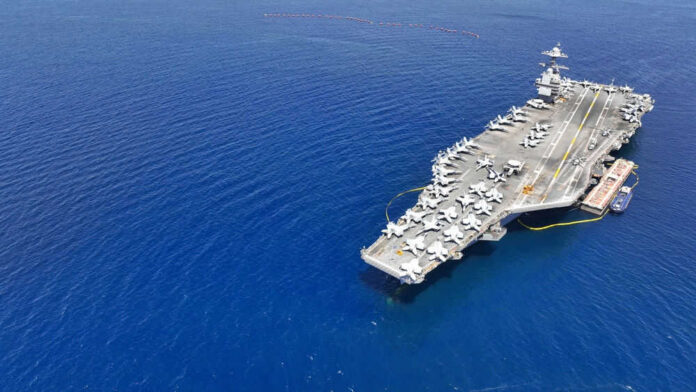
The U.S. Navy said a mishap occurred during aircraft recovery operations aboard the USS Dwight D. Eisenhower, a Nimitz-class aircraft carrier operating off Virginia.
At about 6:18 p.m. Eastern Daylight Time on Sept. 28, two aviators assigned to Carrier Air Wing 3 ejected while attempting to land. Search and rescue teams recovered both aviators.
Four shipboard personnel suffered injuries in the incident and received medical care, according to initial reports from the Navy and wire services.
The Navy used sparse language, as it often does in early mishap notes. That reflects a standard process: confirm what happened, care for people, secure equipment, and route facts into the Navy’s safety system.
More details usually follow after investigators collect statements, logs, and deck video. The point now is clear and limited: an aircraft recovery went wrong, the crew responded fast, and everyone involved is accounted for. The Navy stated both aviators were safely recovered.
2 US Navy aviators eject while landing plane on carrier off Virginia, 4 sailors injured https://t.co/CxxIhkN5qH pic.twitter.com/CSEUttaBQE
— New York Post (@nypost) September 29, 2026
Why Carrier Landings Leave No Margin
Carrier landings demand tight timing and teamwork. The pilot hits a moving deck the size of a grocery store roof, often in fading light and shifting winds. On deck, dozens of sailors steer aircraft, hook up gear, and keep fuel and munitions safe.
A small miss can ripple fast across that crowded space. Naval aviation accepts this risk but builds layers to manage it—procedures, training, and practiced emergency drills that kick in when things break or drift off script.
When an approach turns unsafe, the ejection seat is the last resort. It trades the danger of a bad landing for a controlled blast clear of the jet. That choice can still send shock waves—literally—across the deck.
The seats fire, the jet may tumble or skid, and gear can fail under stress. This is why medical teams stand by during flight ops and why search and rescue crews train for night water pickups. The Eisenhower’s crew used those skills on cue.
How The Navy Investigates Mishaps
The Navy’s safety system starts with rapid notification and preservation of evidence. Safety instructions require immediate reporting to the Naval Safety Command and a formal Safety Investigation Report for any aviation mishap.
Investigators gather crew statements, maintenance records, weather data, and flight deck video, then analyze human, mechanical, and procedural factors. The goal is prevention first, accountability second, and candor throughout the technical analysis chain.
Two U.S. Navy aviators ejected as they were landing their plane on the USS Dwight D. Eisenhower aircraft carrier off the coast of Virginia on Monday and four sailors aboard the vessel were injured in what the Navy characterized as a “mishap.”https://t.co/ZRxCbdLOwl
— ConflictLive (@conflict_live) September 29, 2026
Recent releases show how these probes land. The Navy published findings from the USS Harry S. Truman strike group mishaps, which cited gaps in communication and training that led to multiple high-risk events at sea.
Those reports turned hard lessons into changes in procedures and training pipelines. Expect a similar arc here: a tight initial statement, a thorough inquiry, and targeted fixes that aim to lower risk on the next dusk recovery cycle.
What To Watch In The Next Update
Several specifics will matter. Investigators will look at wind over deck, glide slope cues, touchdown timing, and how arresting gear performed.
They will examine whether the pilot waved off, whether any warning lights or engine issues appeared, and how the deck team positioned and cleared equipment.
The pattern of injuries on deck will help map the mishap path. Trust the process to separate rumor from fact and carry out changes that keep crews alive and ready.
Sources:
apnews.com, wlwt.com, x.com, wavy.com, navy.mil, navalsafetycommand.navy.mil, stripes.com