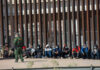
A gunman has reportedly breached the heavily fortified perimeter of Area 51, America’s most classified military installation, marking an unprecedented security failure at the facility synonymous with advanced aerospace testing and government secrecy.
Story Snapshot
- Armed intruder successfully penetrated Area 51’s perimeter defenses, prompting immediate lockdown.
- First known armed attack on the ultra-classified Nevada facility in its 70-year operational history.
- FBI and Air Force launch joint investigation while base remains under heightened security protocols.
- Incident raises serious questions about security gaps at America’s most sensitive military installations.
Security Breach at Nation’s Most Guarded Facility
The attack occurred at the Groom Lake facility, officially acknowledged by the CIA in 2013 but operational since 1955 as a testing ground for classified military aircraft including the U-2 spy plane.
Area 51 operates under some of the most stringent security measures in the United States, with armed guards authorized to use deadly force against trespassers and restricted airspace designation R-4808N protecting the facility from aerial intrusion.
The fact that an armed individual managed to breach these multilayered defenses represents a catastrophic failure that demands immediate congressional oversight.
Base security personnel responded within minutes of the initial breach, implementing emergency lockdown procedures that remain in effect.
The Air Force issued a terse statement confirming “a security incident at a classified facility in Nevada” while the FBI announced federal authorities are “assisting in the investigation of an armed intrusion at a U.S. military installation.”
The deliberate vagueness of these official responses follows the military’s standard protocol for incidents involving classified facilities, but taxpayers deserve transparency about security failures at installations they fund.
Historical Context of America’s Secret Base
Area 51’s reputation for impenetrable security stems from decades of successful protection of America’s most advanced aerospace programs.
The facility has weathered public fascination, conspiracy theories, and the 2019 “Storm Area 51” internet phenomenon that brought thousands of curiosity seekers to the Nevada desert.
Previous incidents involved unarmed trespassers who were quickly apprehended, typically facing fines or brief detention rather than the serious federal charges an armed intrusion would warrant.
The base’s remote location in the Nevada Test and Training Range, approximately 83 miles northwest of Las Vegas, has historically served as its first line of defense.
Warning signs posted around the perimeter clearly state that photography is prohibited and the use of deadly force is authorized, creating a psychological deterrent that has proven effective for seven decades.
This latest incident suggests either a dramatic escalation in the threats facing our military installations or concerning gaps in our defensive capabilities.
Implications for National Security Infrastructure
The successful breach raises troubling questions about security protocols at other sensitive military installations across the nation.
If determined individuals can penetrate Area 51’s defenses, what vulnerabilities exist at nuclear facilities, weapons depots, and command centers that protect American interests?
Defense analysts warn that this incident could inspire copycat attacks or demonstrate tactical approaches that hostile actors might exploit.
The timing of this attack, occurring during a period of heightened global tensions and domestic unrest, adds another layer of concern.
Military officials must now conduct comprehensive security reviews at classified installations nationwide, a process that will likely require significant taxpayer investment in upgraded physical barriers, surveillance systems, and personnel.
The fact that such an investment is necessary after decades of presumed adequate security represents a failure of oversight that Congress must address.
Unanswered Questions Demand Transparency
Federal authorities have released minimal information about the gunman’s identity, motivations, or methods used to breach the facility’s defenses. While operational security considerations may limit some disclosures, the American people deserve to understand how their most protected military installation was compromised.
The investigation must examine whether this was a lone wolf attack motivated by conspiracy theories, a coordinated assault with broader implications, or evidence of insider assistance that enabled the breach.
The incident also highlights the unintended consequences of government secrecy that fuels public fascination and conspiracy theories about Area 51. While classified military programs require protection, the mystique surrounding the facility may actually attract the kind of unstable individuals willing to attempt armed intrusion.
A more transparent approach to discussing the facility’s legitimate aerospace testing mission, without compromising operational security, might reduce its appeal as a target for extremists and conspiracy theorists seeking to “expose government secrets.”