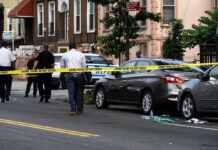
A former U.S. Army soldier carried axes, a machete, a pellet gun, and anti-ICE literature to a New York federal building, then lit gasoline on fire and opened pellet gun fire at the façade, forcing federal officers into a split-second test of courage and preparedness.
Story Snapshot
- Andrew Arrabaca, a 43-year-old former Army soldier, is accused of igniting gasoline and firing a pellet gun at 26 Federal Plaza.
- Officials say he brought multiple weapons and anti-Immigration and Customs Enforcement materials, and made anti-government statements during the incident.
- Three people suffered minor injuries before officers tackled and detained him as flames climbed the building’s exterior.
- The Federal Bureau of Investigation Joint Terrorism Task Force is investigating the attack as an anti-government, anti-ICE extremist act.
A planned morning attack at a major federal hub
Federal officials say this was not a random outburst but a planned attack on one of the most important federal buildings in Manhattan. The Jacob K. Javits Federal Building at 26 Federal Plaza houses Immigration and Customs Enforcement, an immigration court, and Federal Bureau of Investigation offices, making it a prime symbol of federal power.
Investigators say Andrew Arrabaca traveled into the city, stayed overnight near the Holland Tunnel, and moved to the building early the next morning, suggesting he scouted the area before acting.
A former U.S. Army soldier toting an anti-ICE sign set off fireworks, lit a fire and shot a pellet gun Monday morning outside a Manhattan federal office building, injuring three people before security officers subdued him, authorities said. pic.twitter.com/SAPhdjL0SH
— KTLA (@KTLA) July 20, 2026
Witness accounts and security footage describe a scene that shifted from normal weekday rush to chaos in seconds. Around 8:30 a.m., officials say Arrabaca rolled up to the plaza with a cart carrying anti-Immigration and Customs Enforcement literature and a stash of weapons.
He allegedly set off a bundle that looked like fireworks, then fired several shots from an airsoft-style pellet gun toward the building’s north side, jolting people in and around the entrance.
Gasoline, fire, and a fast-moving blaze
After the initial bursts of fireworks and pellets, officials say Arrabaca moved to make the situation much more dangerous. Investigators report he dumped gasoline near an employee entrance and between bushes and stairs along the building perimeter.
He then ignited the fuel with a lighter and a firework, turning it into a crude incendiary device as flames and thick smoke climbed the façade of the federal building. The fire department arrived and put out the blaze before it spread inside or caused structural damage.
What makes this attack stand out is not just the flames but what Arrabaca reportedly brought with him. Officials say he carried two axes, a hammer, a machete, three knives, six incendiary-type devices or fireworks, and the pellet or airsoft gun he fired.
That is a lot of hardware for a Monday morning in lower Manhattan. From a common-sense viewpoint, it looks less like a protest and more like a deliberate attempt to threaten federal workers and send a message with fear.
Minor injuries but major symbolism
Despite the dramatic images of fire and armed officers, the physical toll was limited but real. Officials report three people suffered minor injuries, including two government employees and an immigrant who was there for an immigration status hearing.
A security officer who tackled Arrabaca also sustained minor injuries while taking him down and restraining him. For the people walking into a court hearing or their daily job, the message was clear: even routine federal business can become a target.
The Federal Bureau of Investigation’s New York office says that thanks to fast action by Federal Protective Service officers, New York Police Department officers, and Federal Bureau of Investigation personnel, the scene was contained quickly.
Federal agents reportedly rushed the suspect and tackled him while the fire still burned nearby. From a law-and-order angle, this response shows why having armed, trained officers on site matters. When trouble hits, there is no time for long debates about “defunding” security.
Anti-government, anti-ICE extremism in focus
Federal officials have used strong language to describe Arrabaca’s mindset and motives. Federal Bureau of Investigation Assistant Director James Barnacle said Arrabaca came with “bad intentions” and called him an “anti-American, anti-government extremist.”
During and after the incident, Arrabaca allegedly made anti-government and anti-Immigration and Customs Enforcement statements, and carried printed materials targeting Immigration and Customs Enforcement on his cart. Officials say he admitted he targeted the building and wanted to injure people.
This case fits a wider pattern that researchers have tracked for decades: anti-government extremists targeting state buildings and workers as symbols of the system they hate. Between 1992 and 2022, hundreds of plots and attacks have focused on government sites, often with low death counts but high shock value.
Most attacks in the United States do not kill large numbers of people, but they aim to scare citizens and pressure officials. For those who value order, borders, and respect for institutions, that pattern raises hard questions about how a country stays both free and safe.
A soldier’s past, a nation’s future questions
Arrabaca served in the United States Army in the early 2000s, working as a Patriot missile system repairman or mechanic, and later in the New York Army National Guard. Many veterans leave service and become solid citizens, business owners, and community leaders.
When a veteran instead turns his skills and focus toward attacking the government he once defended, it unsettles people on both sides of the political aisle. It also prompts debate about mental health, radicalization, and how online movements feed anger at federal agencies.
The Federal Bureau of Investigation Joint Terrorism Task Force is now leading the investigation, and federal prosecutors will decide the final charges.
Officials have not yet announced a formal charge sheet, but the mix of incendiary devices, weapons, injuries, and reported extremist statements points toward serious federal crimes. From a common-sense view, there are two clear takeaways.
First, attacks on federal buildings and immigration systems are not abstract headlines; they are direct hits on American sovereignty and rule of law. Second, this kind of incident shows why a nation that respects free speech must still draw a bright line when speech turns into fire, weapons, and fear.
Sources:
apnews.com, usatoday.com, facebook.com, washingtonpost.com, start.umd.edu, dhs.gov