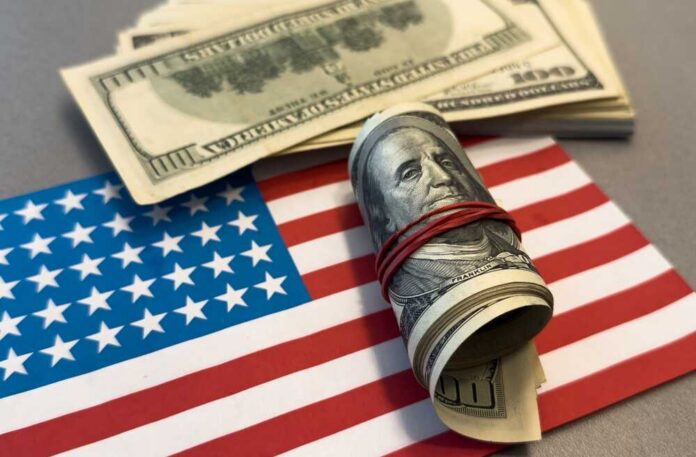
President Trump put a $5,000 price tag on the midterms, promised to every U.S. adult if Republicans win Congress.
Story Snapshot
- Trump pledged a $5,000 “dividend” for every adult, tied to a GOP sweep of Congress.
- He said the money must be spent in the United States and likened it to a shareholder payout.
- Major outlets reported the pledge from the Dallas midterm convention on Sept. 9–10, 2026.
- Coverage notes no detailed mechanism, cost, or legal pathway surfaced in the speech.
Trump’s Dallas Pledge, Stated Plainly
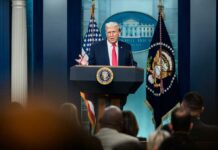
President Trump told a packed Republican midterm convention in Dallas that every U.S. adult would receive $5,000 if Republicans win control of both chambers of Congress in November. He called it a “Trump dividend,” and he framed it as a reward tied to economic strength during his leadership.
He added one catch: the money must be spent in the United States. National outlets present at the event reported the remarks and the conditional nature of the offer the same night.
Reporters on site described a direct exchange with the audience and clear election terms. The promise hinged on a Republican victory in both the House and the Senate.
Trump compared the payment to a corporate cash distribution to shareholders, signaling a one-time, visible benefit. He did not release bill text or an agency plan while on stage.
Reuters summarized the proposal and flagged the absence of details about legality, operations, or financing in the moment.
Who Would Qualify, And What Would It Cost?
Coverage described eligibility as “every adult,” or “every adult American,” without a final definition. That wording left open questions about citizens living abroad, noncitizen residents, and verification steps.
Analysts quickly did napkin math using the adult population and landed above $1 trillion for a universal payout. That estimate came from reporters, not Trump.
The Dallas remarks did not specify whether this would be a tax rebate, a direct transfer, or a credit processed by the Internal Revenue Service.
NEW: President Trump makes a major promise at the Republican midterm convention in Dallas: $5,000 for every adult U.S. citizen if Republicans win both the House and Senate in the midterms.
“I will issue a dividend to every adult citizen in the United States of America for… pic.twitter.com/XqiphY7y8a
— Fox News (@FoxNews) September 10, 2026
Trump added a spending rule: the money must be used inside the United States. Outlets repeated that clause, which suggests a policy goal to boost domestic demand and keep federal dollars circulating in American businesses. Enforcing a “spend here” rule is complex in practice.
The speech did not lay out controls, restrictions, or verification systems to police the rule. That gap drew attention because it speaks to rollout speed and fraud risk.
How This Fits U.S. Politics And Policy
Election-linked cash promises work because they are simple, fast to grasp, and easy to share. They also carry real hurdles once the cheering stops.
New broad cash programs usually require Congress to pass a law, the Treasury Department to set rules, and the Internal Revenue Service to build systems.
Past cycles show the pattern: big checks rally voters, then collide with legal authority, budget math, and timing. That tension hovered over Dallas as reporters summarized the scene and its stakes.
Some listeners heard echoes of Alaska’s dividend story, where residents receive an annual payment from the state’s oil fund. The analogy is only partial. Alaska pays from a permanent fund with a set formula.
Trump’s framing used the language of a dividend but did not tie it to a standing national fund or a statutory formula. That difference matters for durability and for guardrails. Alaska’s model grew from law and endowment, not a campaign window.
Why The Message Lands, And What Comes Next
Five thousand dollars turns heads because it is concrete, near-term, and personal. Households feel prices and debts; a four-figure check cuts through noise. On values, promising a boost for people who work and pay taxes fits a pro-growth, pro-family case.
The “spend in America” rule nods to national pride and local business. The Dallas crowd likely heard both messages at once: reward and rally. Media outlets captured that mix while noting the deliverables were not laid out.
Trump just put a $5,000 check on the midterms.
At the Dallas convention he said every adult U.S. citizen gets a “Trump dividend” if the GOP holds the House and Senate in November. The money has to be spent in the United States.
No bill. No funding plan. Just a pledge tied to… https://t.co/M1r7D6Fz3C— Owl (@OWLCrypt0) September 10, 2026
The political calculus is simple. If Republicans win both chambers, the promise becomes a live test for Congress, the Treasury Department, and the calendar. If they fall short, the offer dissolves as a campaign line.
Between now and then, watch for three telltales: a bill that spells out eligibility and funding; a legal memo from the administration on authority; and a budget estimate that matches the pledge. Those steps would turn applause into policy, or show the limits of the pitch.
Sources:
apnews.com, npr.org, reuters.com, cnbc.com, businessinsider.com, www-cdn.abcnews.com