President Trump banned three national outlets from the White House and enforced it the next day.
Story Snapshot
- Trump announced an immediate ban on CNN, MS NOW, and Politico from White House access.
- The White House turned away reporters from those outlets the following day.
- Trump tied the move to “fake news” and “cumulative stories” he said were false.
- Media groups and the press corps called the ban unconstitutional and vowed to fight it.
What Trump Announced And How Fast It Took Effect
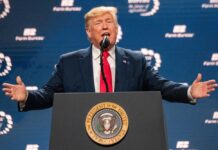
Trump said on September 18, 2026, that he was banning CNN, MS NOW, and Politico from the White House, “effective immediately.” He linked the decision to what he called fake news and a pattern of unfair coverage.
He repeated the stance in Oval Office remarks and said it was a response to “cumulative stories.” The announcement was not a trial balloon. Reporters from those outlets were denied entry the next day, making the policy real in practice.
The step fit a broader pattern in Trump’s clashes with newsrooms. He has long framed some outlets as hostile. He argues that access is a privilege that can be lost for alleged false reporting.
Newsrooms counter that the government cannot pick winners and losers among the press based on content. That standoff moved from rhetoric to the gates of the White House when security staff refused entry to credentialed reporters from the three outlets.
How The Ban Was Justified And What Was Missing
Trump’s stated reason was simple: repeated false or slanted coverage by the three outlets. He cited no list of specific stories, no corrections, and no formal findings.
He framed it as a response to many pieces over time, not one single report. That makes the rationale broad and hard to test. It also leaves room for critics to call it retaliation for negative coverage rather than a neutral enforcement of clear rules.
Reporters asked what the ban covered. The announcement did not spell out whether it applied to hard passes, briefings, outdoor sprays, pool rotations, or the grounds in general.
Coverage noted that this vagueness added confusion. The next day’s denials showed gate-level enforcement, but not the full scope of how far the rule would reach across regular briefings and events over time.
🔊 CNN, MS NOW and Politico journalists say the White House confiscated their press passes after President Trump barred them from its grounds. Listen on the Reuters World News podcast https://t.co/XOJCOWGssf pic.twitter.com/YY2BCW8lCF
— Reuters (@Reuters) September 20, 2026
Pushback From Newsrooms And The Press Corps
CNN said the move was an illegal attack on its constitutional rights and that its coverage of the government would continue. Politico said it would keep reporting and would defend its First Amendment rights.
The White House Correspondents’ Association urged the White House to restore access and called the ban unconstitutional. The three outlets reported that their journalists were turned away from the grounds after the announcement.
These objections rest on a line of court rulings. Federal courts in Washington have said the government cannot exclude journalists from press spaces based on viewpoint when those spaces are generally open to the press.
A 1977 case about White House press passes set the baseline. Recent cases over Associated Press access tested the same ideas again, with judges warning against viewpoint discrimination in nonpublic but regularly used press areas.
What The Law Likely Cares About Next
Courts will look at two questions. First, did the White House target the outlets for their viewpoint, which is speech-based? Second, were the rules clear and applied in a neutral way?
If the White House opens doors to most journalists, it cannot shut them to others because of their coverage, even in rooms that are not open to the general public. The legal record here will hinge on written directives and any neutral standards the White House can show.
Common sense and conservative values can hold two ideas at once. Presidents do not owe special treatment to any outlet, and they should defend the truth with force. But government power must be bound by neutral rules.
If a White House believes a story is false, it should present evidence, seek corrections, and raise its case to the public. Banning whole outlets for coverage alone risks turning a fight over facts into a fight over speech—and that is a fight the Constitution tends to decide in favor of a free press.
Sources:
cnbc.com, reuters.com, nbcnews.com, bbc.com, usatoday.com, dw.com, courthousenews.com