

A lab-made opioid called cychlorphine, reportedly up to 10 times stronger than fentanyl, has been tied to dozens of American deaths and a San Francisco teen’s fatal overdose.
Story Snapshot
- Federal officials linked cychlorphine to at least 55 deaths in 2025–2026.
- San Francisco recorded its first cychlorphine overdose death, a 16-year-old boy.
- Police seized over 20,000 suspected counterfeit pills and made four arrests tied to the case.
- Reports describe the drug as up to 10 times stronger than fentanyl and found in multiple states.
What cychlorphine is and why it spreads so fast
Health officials describe cychlorphine as a synthetic opioid that belongs to a family of lab-made painkillers first explored decades ago. Reporters and toxicologists say it can be up to 10 times stronger than fentanyl, raising the risk of a deadly dose from just a speck. Synthetic opioids spread because labs can make them without farms or long grow cycles. That speed and low cost helped fentanyl overtake heroin, and it now speeds the rise of new, even stronger drugs.
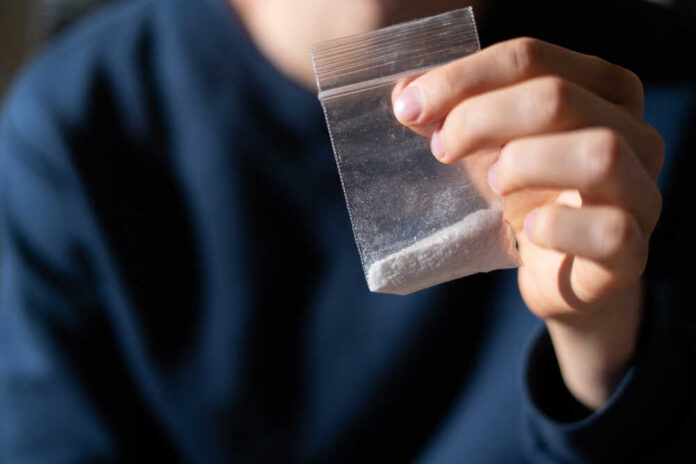
Dealers press these powders into fake pills that look like medicine. Users think the pills are safe and measured. Tests show the opposite. Studies found most counterfeit pills contain fentanyl or other potent synthetics, with big swings in strength from pill to pill. That chaos makes a single tablet a coin flip when a compound hits like cychlorphine, one bad press can kill a teen, a first-time user, or someone in long-term recovery who relapses.
The San Francisco case that set off alarms
San Francisco officials confirmed the city’s first fatal overdose involving cychlorphine, a 16-year-old who died in April. The medical examiner’s report named cychlorphine among the drugs present. The case triggered a months-long police probe. Officers arrested four suspects and seized more than 20,000 suspected counterfeit pills tied to the investigation. Police and prosecutors framed the action as a direct response to the teen’s death and the threat of a new, ultra-strong opioid moving through local markets.
Reporters documented how the teen’s autopsy marked cychlorphine’s first appearance on a San Francisco coroner’s report. That single finding matters beyond one city. New synthetic opioids often appear at the edge first, then move fast. Early carfentanil alerts followed this pattern in 2016, when a handful of cases foretold a national wave. Health and safety agencies warn that waiting for complete proof in each city can cost lives when new compounds emerge.
The national footprint and the official warning
The Office of National Drug Control Policy linked cychlorphine to at least 55 deaths across the country between 2025 and 2026 and reported detections in multiple states. That is not a local scare. It is a national pattern in its early run. The data fit a decade-long trend: synthetic opioids drive most overdose deaths, and each new variant shaves the safety margin even thinner. When potency rises, all the old rules fail. A usual dose becomes a fatal dose.
55 DEATHS LINKED TO DRUG REPORTEDLY 10X STRONGER THAN FENTANYL
A powerful new synthetic opioid is raising alarms across the U.S. after being linked to at least 55 deaths nationwide.
Cychlorphine is an unregulated opioid that addiction expert Nicholas Kardaras, Ph.D., says is…
— Erik Hoffmann (@TheErikHoffmann) October 20, 2026
Local health groups say warnings can cause “alert fatigue,” but silence costs more. Straight facts serve families and first responders best: cychlorphine appears in counterfeit pills, has spread beyond one state, and has been linked by federal notice to dozens of deaths. From a common-sense, conservative lens, this argues for hard-edged enforcement on supply, clear public alerts on risk, and faster lab testing so parents, police, and hospitals see the threat in time to act.
What action reduces harm right now
Parents should treat any unlabeled or street-bought pill as potentially lethal. Community groups should push testing access and carry naloxone, while knowing that ultra-potent opioids can require multiple doses. Police should keep pressure on pill mills and counterfeit operations. Lawmakers should support faster toxicology and data-sharing so city labs don’t fly blind. These steps are not politics. They are survival tactics for a market that swaps recipes overnight and prizes potency over life.
Sources:
foxnews.com, usatoday.com, newsweek.com, sfgate.com, sfist.com, patch.com, kmph.com, pmc.ncbi.nlm.nih.gov, latimes.com