The most sensitive job in American intelligence just went to a Wall Street prosecutor who refused to say who won the 2020 election.
Story Snapshot
- The Senate confirmed Jay Clayton 51–47 along party lines to lead U.S. intelligence.
- Clayton jumps from Manhattan prosecutor and market cop to President Trump’s intelligence chief.
- His confirmation ends Bill Pulte’s hard-edged acting reign over the spy agencies.
- The fight over Clayton is really a fight over politicized intelligence and election trust.
How Jay Clayton Ended Up Running American Intelligence
Jay Clayton did not come up through the spy world. He came up through Wall Street and federal courtrooms. President Trump picked Clayton, then serving as United States attorney for the Southern District of New York and formerly chairman of the Securities and Exchange Commission, to become director of national intelligence.
The White House sold him as a tough prosecutor who chased terrorists, cartels, and financial crime, not as a career analyst buried in classified briefings. That choice told Washington a lot about what Trump wanted from his intelligence chief.
The director of national intelligence sits on top of 18 different intelligence agencies created after the September 11 attacks. The job is to force those agencies to share information and give the president clear warnings without internal turf wars.
Clayton’s confirmation puts a loyal Trump ally in that chair, replacing a temporary acting director, Bill Pulte, whose rough downsizing campaign inside the Office of the Director of National Intelligence made headlines and enemies.
The Senate Battle And What The 51–47 Vote Really Means
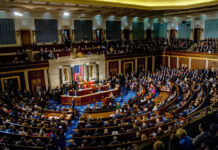
The Senate fight over Clayton was short, sharp, and completely partisan. After a party-line vote in the Senate Intelligence Committee to advance him, the full Senate confirmed Clayton by a 51–47 vote, with Republicans in favor and Democrats opposed. That narrow margin would be routine for a judge or a deputy secretary.
For an intelligence chief, it signals that half of Washington sees the pick through a political lens, not just a resume check. Yet process matters: the president sent the nomination, the committee held a hearing, and the Senate voted and confirmed. That is constitutional order, not a backroom power grab.
BREAKING: The Senate has confirmed Jay Clayton as the new Director of National Intelligence, succeeding Tulsi Gabbard, in a 51–47 party-line vote. pic.twitter.com/iASzNpKY6b
— Breaking911 (@Breaking911) July 28, 2026
Democrats tried to stall, and Trump briefly delayed the hearing to let Pulte serve longer as acting director. Critics framed that delay as gamesmanship tied to fights over surveillance law. The reality is simpler and less dramatic: presidents use acting officials to keep leverage, and the Senate uses delay to demand concessions.
In this case, the Senate blinked first. When the vote finally came, the majority approved Clayton, and the office moved from a controversial temporary steward to a confirmed director with clear legal authority.
Bill Pulte’s Hard Turn As Acting Director And Why It Matters
Bill Pulte’s short time as acting director set the stage for how people read Clayton’s arrival. Pulte, a housing regulator by background, walked into the Office of the Director of National Intelligence and started firing people, cutting layers, and shrinking budgets.
Reports say he drove at least four rounds of layoffs before Clayton’s swearing-in ended his temporary rule. To some, that looked reckless in a dangerous world. To many, it looked like long overdue discipline for an office that had grown large, secretive, and rarely accountable when it made mistakes.
The Senate has confirmed Jay Clayton as director of national intelligence in a 51-47 vote, filling a key national security post.https://t.co/gZtJizYRWS
— Yoopya (@yoopya) July 29, 2026
The succession chain was messy in the public record. Some reports called Pulte acting director; others stressed he had no intelligence experience and was meant as a short-term placeholder. That confusion let critics spin the transition as amateur hour. A stricter reading sticks to the facts that are actually documented.
Trump announced Pulte as a temporary leader. Then he nominated Clayton and pushed the Senate to act. Once the Senate confirmed Clayton, Pulte’s role ended.
The Hearing, The 2020 Question, And Conservative Common Sense
Clayton’s confirmation hearing turned into a televised showdown over the 2020 election. Senators pressed him to say flatly that Joe Biden won. Clayton would not play that soundbite game. He focused on his future duties instead of relitigating the past.
Media outlets blasted his refusal as “humiliating” and used it to claim that Trump was installing an “election denier” to oversee intelligence. For many, the reaction said more about the media than about Clayton. They saw a nominee refusing to join a partisan ritual on command.
From a common-sense view, the director of national intelligence should care most about the next threat, not the last political fight. Clayton’s careful answers matched that idea. He did not create new conspiracy theories. He also did not give senators a clip they could use to score points with their base. Critics argue that his caution signals disloyalty to “democracy.”
That is a stretch based more on feelings than on documents. The actual record shows a confirmed official pledging to follow the law and protect the country, not to decide winners and losers in past elections.
What Clayton’s Confirmation Signals For The Intelligence Community
Putting a tough prosecutor and former market cop in charge of intelligence sends a clear message to the bureaucracy. Trump wants someone who is comfortable pushing back on elite opinion and who has already survived high-pressure fights in New York and Washington.
The White House statement praised Clayton’s work against terrorists and cartels and framed him as the right leader to “strengthen America’s intelligence community.” That is the opposite of a quiet caretaker pick. It is a signal that change, and likely friction, is coming inside the spy agencies.
The broader pattern is familiar. When Republicans install an ally in a powerful national security role, opponents cry “politicization” of intelligence. When Democrats do the same, they talk about “restoring norms.”
People over 40 have seen this movie many times. What stands out in Clayton’s case is not the partisan noise but the hard legal fact: the Senate held a hearing, cast a recorded vote, and confirmed him. That means the debate now shifts from “should he serve” to “how he uses the power he was lawfully given.” That is where citizens should keep their attention.
Sources:
cnbc.com, en.wikipedia.org, nytimes.com, cnn.com, whitehouse.gov, nbcnews.com, usatoday.com, youtube.com