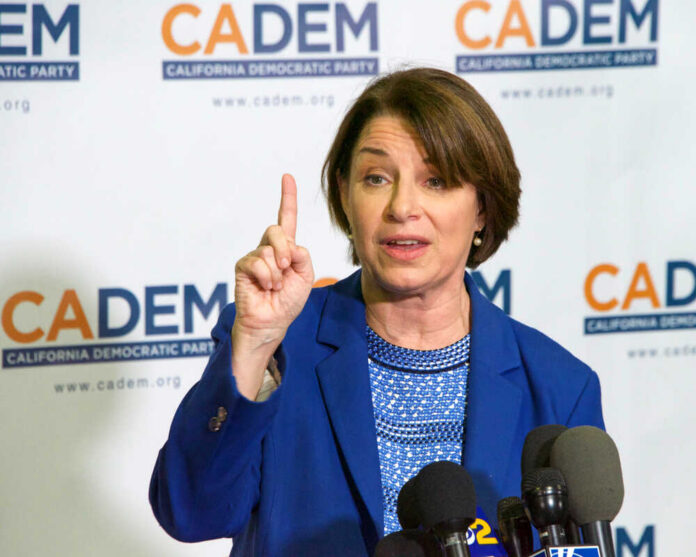
A would-be mass shooting at the Mall of America pushed Senator Amy Klobuchar to demand bigger, faster anti-terror investments that match the threat she says law enforcement just stopped cold.
Story Snapshot
- Federal agents arrested an 18-year-old accused of planning an Islamic State-linked attack at the Mall of America.
- Prosecutors say he aimed to kill dozens and bought an AK-47-style rifle and ammo from an undercover agent.
- Senator Amy Klobuchar now calls for stronger counterterror tools, funding, and faster information-sharing.
- The case reflects the post-9/11 sting playbook that courts back and critics debate.
What Agents Say They Stopped
The United States Department of Justice says agents arrested Sheikhdoon Abdullahi Mohamud after a long investigation. A federal complaint charges him with receiving a gun and ammunition to commit a federal crime of terrorism. Court papers say he pledged support to the Islamic State and planned to shoot shoppers at the Mall of America. Agents moved in after he paid for an AK-47-style rifle and 200 rounds of ammunition from an undercover employee, according to the complaint.
Prosecutors state the target and timing were not vague. Reporting based on the complaint says Mohamud spoke of killing dozens and looked to strike during a crowded cultural event at the mall. Officials say he chose soft targets to raise the body count and terror effect. He was arrested in a public park after taking possession of the weapon and ammo, according to the affidavit summaries in local and national outlets. A complaint is an allegation; he has not been convicted.
Klobuchar’s Push: Tools, Speed, And The Local Edge
Senator Amy Klobuchar responded by urging major investments that lock in what worked and fix what lagged. She points to three needs: better digital intelligence so flagged threats reach agents and sheriffs in minutes, not days; more Joint Terrorism Task Force staffing to keep eyes on high-risk leads; and training money for mall cops and local police to spot pre-attack behaviors. That focus tracks with the prevention story in Minnesota, where coordination and patience appear to have mattered.
Klobuchar’s call also leans hard on common-sense deterrence. She backs harsh penalties for anyone who aids a terror plot and faster removal of foreign propaganda networks that recruit teens online. That stance reflects a baseline view shared by many conservatives: protect public spaces first, argue theory later. When a case shows intent, preparation, and a weapon handoff, the priority is to stop the attack and make the arrest, then let a jury weigh the evidence.
The Sting Debate And Why Courts Keep Siding With Prosecutors
This case follows the same pattern seen across many terror arrests since 2001. The Federal Bureau of Investigation builds a file with an informant, then an undercover agent, then a controlled handoff that proves intent and capability. Critics warn about entrapment in such stings. Academic work tracks that debate, but United States courts have almost always rejected entrapment defenses in post-9/11 terror cases. Judges tend to see predisposition, repeated intent, and active steps as the key test, and prosecutors know how to show those elements.
FBI Foils Alleged ISIS Mass Shooting Plot at Mall of America, Arrests 18-Year-Old Suspect [WATCH]https://t.co/62qNFBTNTQ
— LifeZette (@LifeZette) October 7, 2026
The lesson for policy is blunt. If the Islamic State and copycats hunt for soft targets, then speed and local muscle beat lofty memos. Klobuchar’s approach tries to fuse federal reach with hometown awareness: better digital tips, more trained patrols, and drills that fit the layout of a massive mall. That blend also respects civil order. Focus on clear threats, document intent, and act before the first shot—then prove it in court. The Minnesota case gives that model fresh proof points.
What “Major Investments” Should Look Like Now
Congress can fund three lines right away. First, sprint money to the Joint Terrorism Task Forces for more linguists, digital forensics, and open-source threat monitoring. Second, grants to state fusion centers to push credible tips to school officers, mall security, and local patrol in real time. Third, targeted prevention work that helps families, mosques, churches, and youth groups flag early signs of radical pull without turning community ties into suspicion labs. None of this is flashy. All of it is faster.
That is the point. A teenager with hate in his phone and a rifle in his bag can do massive harm in minutes. The Minnesota arrest shows that trained teams, patient work, and a tight takedown can beat that clock. Klobuchar wants to scale that edge before the next plot picks a food court on a Saturday afternoon. On this, the facts speak louder than theories. Build what worked, test it often, and keep doors open for the tip that saves lives tomorrow.
Sources:
pjmedia.com, cnn.com, wbaltv.com, abc7ny.com, washingtonexaminer.com, aol.co.uk